ALL ABOUT
AKLAN

Aklan Province


 Most of the people attend the masses for the Santo Niño, and getting benefit dances sponsored by the goverment organizations. The formal opening mass giving the festival religous event. The procession begins with rhythmic beats of drum and dances parading in the street.
The 2nd day starts at dawn with a rosary procession, which ends in a community mass, and procession. The word “Hala Bira Pwera Pasma!” is associated with the Santo Niño Ati-Atihan Festival as the devotess keep on going with the festival all over the town from morning to the wee hours of the next morning, rain or shine, for 1 week or even more.
The people believes that the mraculous Child Jesus will protect them from danger and illness. The highlight of Ati-Atihan festival occurs on the last day, the 3rd sunday of January, when the groups are representing different tribes compete for tourist “attention and prizes“. The festival end with procession of many people carrying torches and different kinds of images of Sto. Niño. The winners of the contest will be announced at a masquerade ball which tell the end of the festival
.

occupies the northern third of the island of Panay and is bordered by the provinces of Iloilo from the south, Capiz from the east, and Antique from the southwest. It also faces the Sibuyan Sea from the north. The province includes the island of Boracay which is located at its northwestern tip.
The province boasts high geographic diversity, ranging from white sandy beaches, mangroves, and mountainous lanscapes. It also boasts the river Akean, which appears unique due to its "boiling or frothing" appearance.
A Brief History___________________________
Aklan, originally known as "Minuro it Akean", is considered as the oldest province in the country and is believed to have been established as early as 1213 by settlers from Borneo ruled by Datu Dinagandan.
From the time of the Spanish colonial administration until Pilipino was instituted as the Philippine national language, Aklan was spelled "Acean", and its chief town Kalibo was spelled "Calivo".
In 1942, the Japanese Imperial forces landed in Aklan,
In 1945, landed by the Filipino and American troops with the Filipino guerrillas liberated in Aklan attack from the Japanese troops during the Second World War.
The People______________________________
The main inhabitants of the province are the Aklanon, who fall under the Visayan ethnic group. Other inhabitants include the Negrito, locally known as the Ati, and the Sulod, a lesser known tribal group located at the hinterlands of Panay. Other Visayans are also present such as the Karay-a, the Hiligaynon, and the Capiznon.
Festivals_________________________________
A known icon of the province is the annual Ati-Atihan Festival in Kalibo. Originally, The festivity was to celebrate the coexistence between the Ati [ local name for the Aetas]and the Malays who were newcomers to the Island. The Ati lives in the mountain or elevated regions and the Malays in the flatlands or close to the water. The Festivity starts at the onset of the dry season, at which time the Ati comes down from the mountains to trade and celebrate with the Malays. When the Spaniards came and established their own Government and converted the Malays to their Christian Relegion, They asked or possibly coerced the Malays to celebrate this Festivity to coincide with the Feast of "Santo Nino" which is usually held during the third week of January. Accordingly, because of this change [ Ati uses the Moon to tell Seasonal changes]the Ati could not be available to participate in the celebration. The Malays have to paint their faces with soot to simulate the appearance of the Ati.
A known icon of the province is the annual Ati-Atihan Festival in Kalibo. Originally, The festivity was to celebrate the coexistence between the Ati [ local name for the Aetas]and the Malays who were newcomers to the Island. The Ati lives in the mountain or elevated regions and the Malays in the flatlands or close to the water. The Festivity starts at the onset of the dry season, at which time the Ati comes down from the mountains to trade and celebrate with the Malays. When the Spaniards came and established their own Government and converted the Malays to their Christian Relegion, They asked or possibly coerced the Malays to celebrate this Festivity to coincide with the Feast of "Santo Nino" which is usually held during the third week of January. Accordingly, because of this change [ Ati uses the Moon to tell Seasonal changes]the Ati could not be available to participate in the celebration. The Malays have to paint their faces with soot to simulate the appearance of the Ati.
POINT OF INTEREST
VISITING THE PROVINCE OF AKLAN
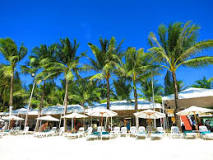
Boracay is a small island in the central Philippines. It's known for its resorts and beaches. Along the west coast, White Beach is backed by palm trees, bars and restaurants. On the east coast, strong winds make Bulabog Beach a hub for water sports. Nearby, the observation deck on Mount Luho offers panoramic views over the island. Offshore, coral reefs and shipwrecks are home to diverse marine life.
Museo It Akean
Museo it Akean is showcasing the Aklanon heritage. This museum displays the artifacts found in the province of Aklan. Among these are porcelain, jars/pottery, stones, pina clothing, ancient farming tools, household utensils, religious images, etc. There are also some clippings on the separation of Aklan from Capiz and memorable items from the father of Aklan, Godofredo P. Ramos. The building also where this museum is dwelling is one of the remaining old buildings here in Kalibo. Though it had been renovated caused by the test of time yet its foundation is still original and its facade remains as it was in the past. Inside the Museo it Akean has a store selling Aklan made products like pina cloth, Ati-atihan souvenir items, Sto. Nino de Kalibo images, etc. The price is affordable.
Jawili Falls
Tourist attraction in Tangalan, Aklan, Philippines
I visited the place this summer and there's a drought in the waterfalls. But I continued trekking until I reached the topmost portion of the falls. It was a blessing also that it was drought because I saw every basin that form like a giant stone staircase. It's picture perfect. The entrance fee is only P5. For hobbyist photographer, this is the right time for you.
ONE OF THE BIGGEST EVENT OF AKLAN
THE ATI - ATIHAN FESTIVAL
This Festival is an honour of the Santo Niño, it is celebrated in the 3rd week of January. Concluding the 3rd Sunday, on the town of Kalibo, AklanPhilippines.
The meaning of Ati-Atihan “make believe Ati’s” or “tobe like Ati’s“. Itas are the primary settlers in the island according to history books. They are the earliest of Panay Island where the province of Aklan situated.
The Ati-Atihan Festival consist of tribal music, dance, accompanied by indigenous weapons and costumes, and parade in the street. They also paint their faces in different ways and who are dressed in the most unique costumes. Christians and non Christians watch this day with religous processions. It it inspired many other Philippines Festivals including the Sinulog Festival of Cebu and Dinagyang of Iloilo City,both are adaptation of Kalibo’s Ati-Atihan Festival, and it holds the tittle of The Mother of All PhilippinesFestivals.

The 2nd day starts at dawn with a rosary procession, which ends in a community mass, and procession. The word “Hala Bira Pwera Pasma!” is associated with the Santo Niño Ati-Atihan Festival as the devotess keep on going with the festival all over the town from morning to the wee hours of the next morning, rain or shine, for 1 week or even more.
The people believes that the mraculous Child Jesus will protect them from danger and illness. The highlight of Ati-Atihan festival occurs on the last day, the 3rd sunday of January, when the groups are representing different tribes compete for tourist “attention and prizes“. The festival end with procession of many people carrying torches and different kinds of images of Sto. Niño. The winners of the contest will be announced at a masquerade ball which tell the end of the festival
.

Viva Santo Niño
It is said that the procession is the climax of the fiesta. It held on the least Sunday. The dancers never failed to enter Kalibo church every time they pass by.

No comments:
Post a Comment